Free 6-Week Cash Flow Forecast for Small Business
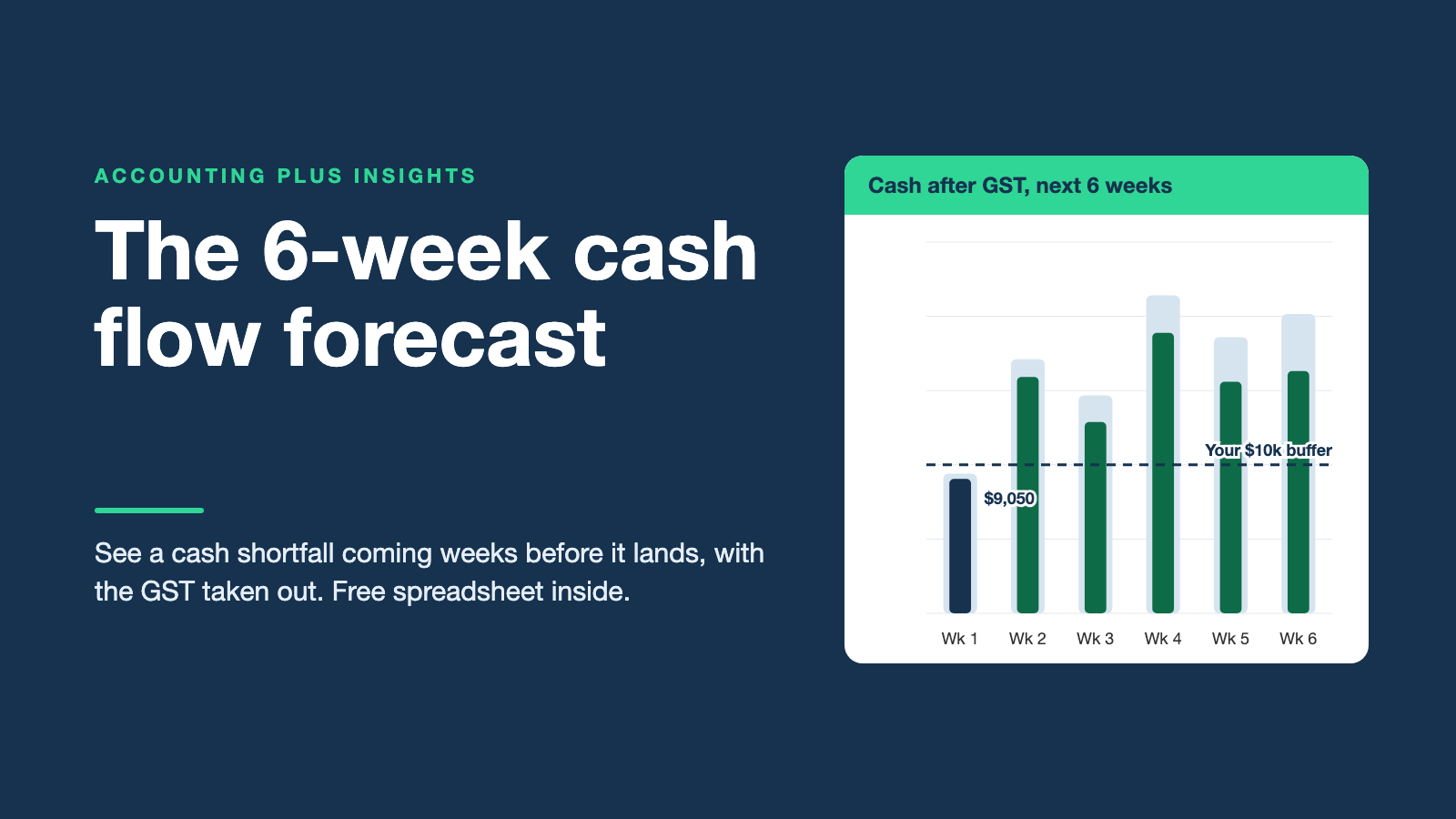
Most business owners check the bank balance every morning. The trouble is, the bank balance only tells you about today. It says nothing about the wages due next Thursday, the supplier account at the end of the month, or the BAS payment sitting in December. A six-week cash flow forecast does, and it takes about 15 minutes to set up.
We've built a free spreadsheet that does the maths for you, including the GST. Download it below, put in your own numbers and you'll see your bank balance week by week for the next six weeks.
Download the free 6-Week Cash Flow Forecast (Excel, works in Google Sheets and Numbers)
Why six weeks?
Six weeks is far enough out to see a problem coming and close enough that your numbers are reasonably reliable. You know which jobs are booked, which invoices are out, and which bills are due. Go much further and the forecast turns into guesswork. Go shorter and by the time you see the gap, it's already on you.
More importantly, six weeks gives you time to act. You can chase an overdue invoice, ask a supplier for 30 days, or line up an overdraft before you need it. All of that is much harder when the shortfall is due on Friday.
The GST in your account isn't yours
If you're registered for GST, every customer payment that lands in your account includes GST you'll hand to the ATO at your next BAS. It feels like your money because it's in your account. It isn't.
The forecast works out the GST in your money in and money out, keeps a running total of what's building up for the next BAS, and shows a second line: cash that is really yours. That's the number to manage the business on.
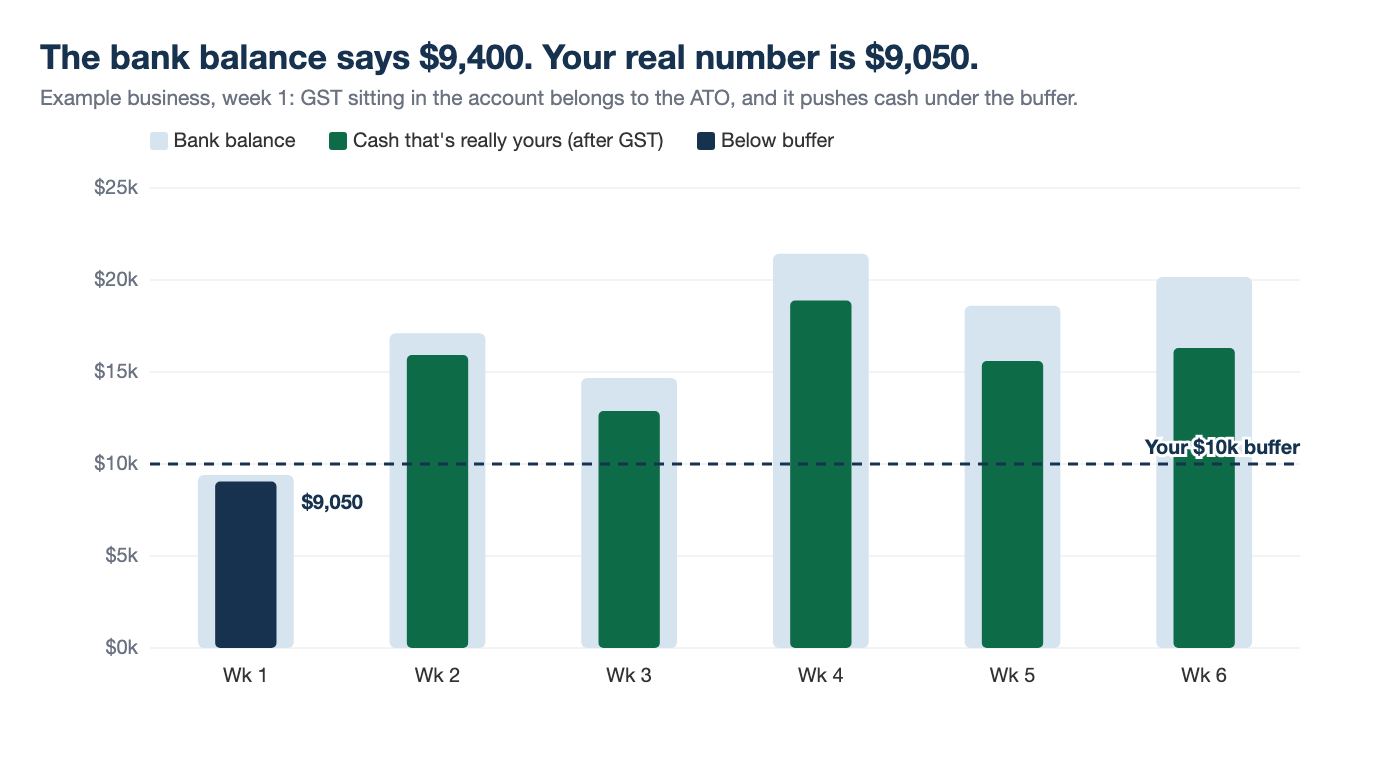
In the example business in the spreadsheet, the bank balance at the end of week 1 is $9,400. Take out the GST already collected and the real figure is $9,050, under the owner's $10,000 comfort level. The bank app would never tell you that.
How to fill it in
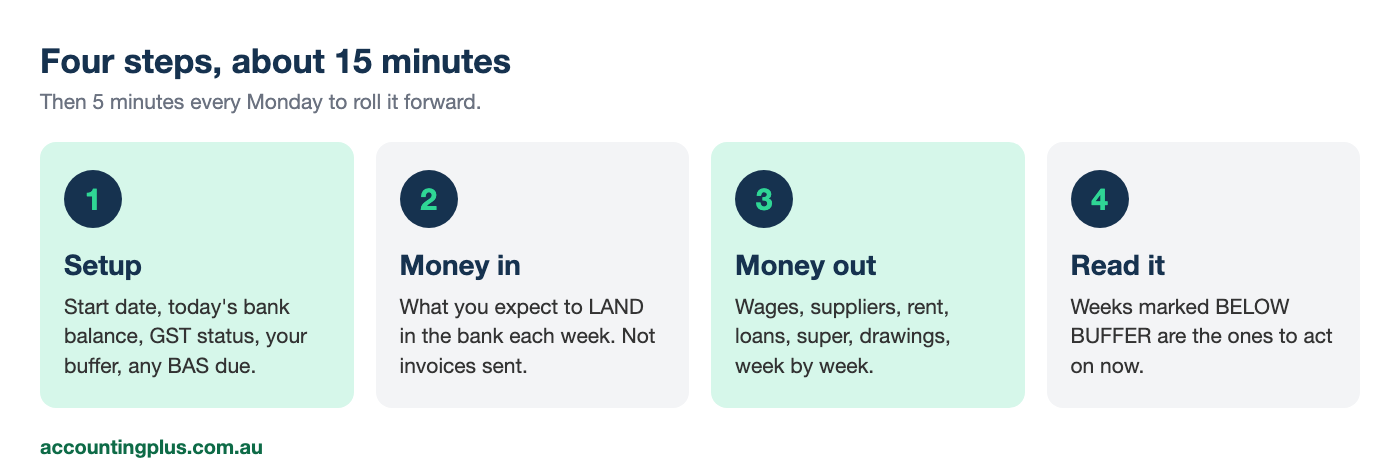
- Setup: your business name, the Monday you're starting from, the bank balance that day, whether you're registered for GST, the lowest balance you're comfortable holding, and any BAS or ATO payment due in the next six weeks.
- Money in: what you expect to receive each week. That means payments landing in the bank, not invoices you've sent. If a customer usually pays in 30 days, put the money in the week it will actually arrive.
- Money out: wages, PAYG withholding, super, suppliers, rent, loan repayments, vehicles, software and your own drawings, in the week each one leaves the account.
- Forecast: read the result. Any week marked BELOW BUFFER is a week to act on now.
Only the light blue cells are for typing in. Everything else is a formula. Enter amounts including GST and set the GST column to No for wages, PAYG, super, loans, drawings and tax payments.
Make it a Monday habit
A forecast you build once is a nice spreadsheet. A forecast you update every week is a management tool. Every Monday, move the start date forward a week, put in the new bank balance, drop the week that's finished and add the next one. Five minutes, and you always know where you stand for the next month and a half.
Compare what you forecast with what actually happened, too. If customers keep paying a week later than you planned, that's worth knowing, and it's usually fixable with tighter terms or a quicker invoice.
What if a week comes up short?
The spreadsheet includes a tab of practical options, roughly in the order they're worth trying:
- Call customers with overdue invoices and send a pay-now link while you're on the phone.
- Invoice the day the job finishes, shorten terms for new customers and take deposits on bigger jobs.
- Ask your main suppliers for longer terms before the bill is due, not after.
- Hold off non-essential purchases until after the tight week.
- Reduce drawings for a few weeks and catch up once the cash lands.
- If a BAS payment falls in a tight week, lodge on time anyway and talk to the ATO about a payment plan before the due date.
If the forecast shows the gap getting bigger week after week, it isn't a timing problem any more. That's the time to sit down with your accountant.
Want us to do it for you?
Accounting Plus clients can hand this over. We'll send you a short online form for the numbers, build the forecast from your bookkeeping, and roll it forward with you each week so there are no surprises at BAS time. Call us on 0485 065 556 or visit accountingplus.com.au.
Download the free 6-Week Cash Flow Forecast
This article and the spreadsheet are general information and a planning tool only. They are not financial, tax or legal advice. Check your GST, BAS and tax obligations with the ATO or a registered tax agent.